Trump says ultimatum for Iran to reopen Strait of Hormuz postponed amid negotiations
Posted by Temmy
Mon, March 23, 2026 2:52pm
What to know about the Iran war:
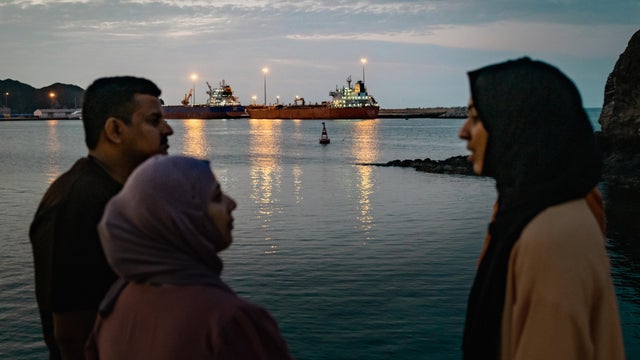
o President Trump said Monday that his ultimatum for Iran to reopen the Strait of Hormuz by later in the day or face strikes on its power plants was being postponed amid "GOOD AND PRODUCTIVE" peace talks with Tehran. Iranian state media deny any talks and claim Mr. Trump "retreated" from his deadline "out of fear of Iran's response."
o Iran answered Mr. Trump's threat to "obliterate" the country's power plants if it didn't reopen the Strait of Hormuz by Monday evening with attacks on Israel and Gulf states over the weekend, and threats to respond in kind with attacks on energy infrastructure and by laying sea mines across the "entire Persian Gulf."
o Iran has demonstrated an ability to keep hitting back, albeit at a slower pace, despite 24 days of U.S.-Israeli strikes that a rights group says have killed more than 3,200 people in the country, including at least 214 children.
German leader "grateful" to Trump for delaying threatened strikes on Iranian power plants
German Chancellor Friedrich Merz said Monday he was "grateful" to US President Donald Trump for delaying previously threatened strikes on Iranian power plants.
"I expressed my concerns to him regarding the announced attacks on the power plants in Iran," Merz told a Berlin press conference about their phone call the previous day. "I am grateful that he said today he is postponing them for another five days."
Iranian Foreign Ministry calls Trump dropping Strait of Hormuz deadline a bid to lower energy prices, denies direct talks
Iranian state media cited the country's Foreign Ministry on Monday as calling President Trump's sudden move to drop his ultimatum for Tehran to reopen the Strait of Hormuz, "part of efforts to lower energy prices and buy time for the implementation of his military plans."
Referring to Mr. Trump's claim of ongoing negotiations with Tehran, which he suggested in a social media post could yield a resolution to the entire conflict, the ministry said there had been multiple and ongoing "initiatives from regional countries to reduce tensions, and our response to all of them is clear: we are not the party that started this war, and all such requests must be referred to Washington."
Speaking Monday morning to Fox and other news outlets, Mr. Trump insisted there had been negotiations as recently as Sunday evening, involving his senior envoys Steve Witkoff and Jared Kushner, though he didn't say with whom they had spoken.
Stock prices rise after Trump postpones deadline for Iran to reopen Strait of Hormuz
Stocks look set to surge in early trading Monday after President Trump postponed his ultimatum for Iran to reopen the Strait of Hormuz, saying the U.S. is engaged in "good and productive" negotiations with Tehran.
S&P 500 and Dow Jones Industrial Average futures pointed to 1.6% gains in Monday morning trading. Before Mr. Trump announced the delay on social media, futures had pointed to an almost 1% decline.
Oil prices also immediately retreated, with Brent crude, the international benchmark, and West Texas Intermediate, the U.S. benchmark, both falling 6.2%.
Mr. Trump had set a deadline of Monday night for Iran to reopen the Strait of Hormuz to international shipping, threatening to "obliterate" Iran's power plants if it didn't concede. Iran responded by threatening to attack U.S. and Israeli energy and infrastructure across the Middle East.
On Monday morning, Mr. Trump said the U.S. would hold off on strikes against Iranian power plants and other energy infrastructure for five days, seemingly easing investor concerns that the Iran war could escalate and deepen the growing global energy crisis.
Iran calls claims of failed missile strike on Diego Garcia "Israel's most recent disinformation"
Iran's Foreign Ministry dismissed claims that the country had attempted to target the joint U.S.-U.K. military base on the remote Indian island of Diego Garcia on Friday as Israeli "disinformation."
Israel's defense chief called the purported attempt by Iran to hit the base, more than 2,000 miles from Iranian territory, as evidence that Tehran poses a threat not only to its neighbors, but to European capitals, as the missiles required would have significantly longer range than the ones it has been firing for more than three weeks at Gulf states.
"These missiles are not intended to strike Israel. Their range extends to the capitals of Europe — Berlin, Paris, and Rome are all within direct threat range," Israeli Chief of Staff Lt. Gen. Eyal Zamir said Saturday night.
"They are putting everyone in their sights," Prime Minister Benjamin Netanyahu said, adding a call for other countries to heed "President Trump's call to have the international community confront this terrorist, fanatic regime of zealots."
On Monday, Iranian Foreign Ministry spokesman Esmail Baqaei rejected the accusation, saying in a social media post that "even the NATO Secretary General (who is infamously pressing Alliance members to appease the U.S. and support their illegal war on #Iran) declines to endorse Israel's most recent disinformation, speaks volumes: the world has grown thoroughly exhausted with these tired and discredited 'false flag' storylines."
NATO Secretary General Mark Rutte said on CBS' "Face the Nation with Marget Brennan" on Sunday that the alliance "cannot confirm that at the moment, so we're looking into that," when asked about the alleged Iranian targeting of Diego Garcia.
Iran says 68 "operatives" linked to opposition networks, including that of exiled crown prince, arrested
Iran's state news agency IRNA reported Monday that security forces had arrested "68 operatives affiliated with monarchist groups, the Mujahedin-e Khalq (MEK), and espionage networks across the country over the past several days."
The reference to "monarchist groups" indicates the detention of people deemed by Iran to back the country's exiled crown prince Reza Pahlavi, who has been a vocal critic of the regime since his father, the former U.S.-backed shah, was ousted amid the Islamic Revolution in the late 1970s.
Pahlavi's name was chanted by some demonstrators during the massive, nationwide anti-government protests that swept across Iran in January, and he has been spoken of by analysts as a potential interim leader if the current Islamic Republic is toppled, though the level of support inside Iran for the royal family is difficult to gauge.
The Iranian national police announced the arrests of the 68 alleged spies, according to IRNA, which said they had been caught monitoring sites struck by U.S. and Israeli missiles and transmitting video of those locations "to hostile media outlets."
Iran's official news agency denies any ongoing talks with the U.S.
Iran's official Fars news agency said Monday, citing an unnamed source, that the regime in Tehran was not engaged in any direct negotiations with the U.S. nor through intermediaries, contradicting President Trump's claim of "in depth, detailed, and constructive conversations, witch [sic] will continue throughout the week."
Echoing an earlier statement by Iranian state TV, Fars cited its source as claiming Mr. Trump had "retreated" from his threat to bomb the country's power plants if the Strait of Hormuz was not reopened by Monday evening due to Iran's counter-threat to attack energy infrastructure across the Middle East.
Iranian state TV claims "Trump withdrew his 48-hour ultimatum out of fear of Iran's response"
Iran's official state television network IRIB said on its official Telegram social media channel Monday that President Trump had postponed his deadline for the Islamic Republic to reopen the Strait of Hormuz to international maritime traffic "out of fear of Iran's response."
"Trump has withdrawn his 48-hour ultimatum," the network said, referring to the timeframe Mr. Trump gave in a post on his Truth Social platform Saturday evening, demanding that Iran reopen the strait by about 8 p.m. Eastern time on Monday or warning he would order strikes on the country's power plants.
Trump says "good and productive" talks with Iran mean threat of strikes on power plants off for 5 days
President Trump said in a message posted on his Truth Social platform early Monday that his ultimatum for Iran to open the Strait of Hormuz to shipping was being shelved for at least five days after "VERY GOOD AND PRODUCTIVE CONVERSATIONS REGARDING A COMPLETE AND TOTAL RESOLUTION OF OUR HOSTILITIES IN THE MIDDLE EAST."
He did not mention any agreement by Iran to ease its strikes across the region that have prevented oil tankers from transiting the strait for more than three weeks, or give any indication that the vital shipping lane would soon reopen, but he said his threat from Saturday to attack Iran's power plants was on hold.
"BASED ON THE TENOR AND TONE OF THESE IN DEPTH, DETAILED, AND CONSTRUCTIVE CONVERSATIONS, WITCH WILL CONTINUE THROUGHOUT THE WEEK, I HAVE INSTRUCTED THE DEPARTMENT OF WAR TO POSTPONE ANY AND ALL MILITARY STRIKES AGAINST IRANIAN POWER PLANTS AND ENERGY INFRASTRUCTURE FOR A FIVE DAY PERIOD, SUBJECT TO THE SUCCESS OF THE ONGOING MEETINGS AND DISCUSSIONS," Mr. Trump said, without any further explanation.
Iran has not acknowledged any negotiations with the Trump administration, and its Security Council threatened earlier Monday to mine the entire Persian Gulf if the U.S. did strike its power plants.
UAE says 7 Iranian missiles, 16 more drones intercepted on Monday
The United Arab Emirates' air defenses intercepted seven Iranian ballistic missiles and 16 drones on Monday alone, the country's Ministry of Defense said, showing that while the U.S. and Israel insist the Islamic Republic's offensive capabilities have been depleted, it still has weapons and the ability to launch them at its neighbors.
The UAE said it had intercepted a total of 352 Iranian ballistic missiles, 15 cruise missiles and 1,789 drones since the U.S. and Israel launched their war on Feb. 28, drawing immediate attacks by Iran on U.S. allies across the Persian Gulf.
The strikes have killed eight people in the UAE, including two members of its armed forces, and left 161 others wounded.
Iran threatens to mine Persian Gulf, says only option to open Strait of Hormuz is "coordination" with Tehran
Iran's National Defense Council warned Monday that any further attacks on its power plants would be met with corresponding "decisive and destructive retaliation" on energy infrastructure across the Middle East.
In a statement conveyed by the semi-official Tasnim news agency, which is close to the powerful Islamic Revolutionary Guard Corps, the council also alluded to U.S. threats to expand attacks on Kharg Island, home to vital Iranian oil infrastructure, and the lingering threat of a possible U.S. ground invasion as more troops head to the region.
"Any enemy attempt to attack Iranian coasts or islands will naturally lead, following standard military procedures, to the deployment of various naval mines — including moored and drifting mines — across all access routes and communication lines in the Persian Gulf."
"In such a case, the entire Persian Gulf would effectively face a prolonged situation similar to the Strait of Hormuz, and responsibility for this would lie with the aggressor," the statement said, noting "the memory of over 100 minesweepers failing to clear a limited number of naval mines in the 1980s."
"The only safe way for non-hostile countries to pass through the Strait of Hormuz is coordination with Iran," it said.
CENTCOM chief says slowing attacks targeting civilians shows Iran's "desperation"
The head of the U.S. military's Central Command says Iran is "operating in a sign of desperation" by targeting civilian sites in the war.
In an interview with the Farsi-language Iranian opposition satellite network Iran International that aired early Monday, U.S. Navy Adm. Brad Cooper said: "They're operating in a sign of desperation. ... In the last couple of weeks, they've attacked civilian targets very deliberately, more than 300 times."
Cooper noted a slowdown in Iranian incoming fire across the Mideast as the war entered its fourth week.
"At the beginning of the conflict, you saw large volumes, in the dozens of drones and missiles," Cooper said. "You no longer see that. It's all one or two at a time."
Cooper said the U.S. campaign against Iran was continuing "ahead or on plan," targeting missile and drone manufacturing sites as well other military infrastructure.
"So it's not just about the threat today. We're eliminating the threat of the future, both in terms of the drones, the missiles, as well as the navy," he told Iran International.
Cooper said it wasn't yet time for the Iranian public to come to the streets, citing the ongoing risks from the joint U.S.-Israeli strikes.
"They're launching missiles and drones from populated areas and you need to stay inside for right now," Cooper said.
Both the Israeli and U.S. governments have voiced hope that the Iranian public will rise up and topple the country's nearly-half-century-old ruling Islamic theocracy, and Cooper said "there will be a clear signal at some point, as the president has indicated, for you to be able to come out."
Iran issues apparent indirect threat to Mideast power plants including UAE nuclear facility
After Iran threatened power plants across the Mideast, Iranian news outlets published a list of such facilities, including the United Arab Emirates' nuclear power plant. The report by the semiofficial Fars news agency, close to its paramilitary Revolutionary Guard, appeared to be an indirect threat to the sites, including desalination plants in the Middle East.
The list also included the UAE's Barakah nuclear power plant, which has four reactors out in the western deserts of the country near its border with Saudi Arabia.
The judiciary's Mizan news agency also published the list.
The threat by Tehran puts at risk both electrical supplies and water in the Gulf Arab states, particularly as the desert nations commingle their power stations with desalination plants crucial for supplying drinking water.
It was Iran's response to President Trump's 48-hour deadline for the Islamic Republic to allow ships to freely transit the Strait of Hormuz, which expires just before 8 p.m. Eastern on Monday.
In an earlier statement conveyed by state media, Iran's Islamic Revolutionary Guard Corps announced Monday a "decision that if the power plants are attacked, Iran will retaliate by targeting the power plants of the occupying regime and the power plants of regional countries that supply electricity to U.S. bases, as well as the economic, industrial and energy infrastructures in which Americans have shares."
"Do not doubt that we will do this," the statement added
NATO Secretary General Mark Rutte says he's had "several conversations this week" with Trump
Earlier this week, President Trump said NATO is a "paper tiger without the U.S.," but NATO Secretary General Mark Rutte said Sunday that he had "several conversations this week with the president."
"The good news is that, look, we had the U.S. for weeks planning for [Operation] Epic Fury and for reasons of security and safety, they could not share with European allies and allies around the world and partner countries what they were doing, because that would have jeopardized the effect of the first attack," Rutte said Sunday on "Face the Nation with Margaret Brennan."
Rutte said it was "only logical" that 22 nations — many of which are in NATO — needed some time to "come together." He said he has been in phone calls this week with British Prime Minister Keir Starmer and French President Emmanuel Macron, which helped lead "22 countries now signing up to this initiative."
"Obviously, I cannot in a program which is aired around the world, and you have a lot of viewers, discuss with you what is discussed in secrecy, but I can assure you that, of course, and the U.K. is at the forefront of leading this effort of the 22 countries on the leadership of Prime Minister Starmer," Rutte said.
Israel's Netanyahu says more international help needed after Iranian strike wounds almost 200
Iranian strikes hit two communities near Israel's main nuclear research center on Saturday night, wounding nearly 200 people in the country's south. It was the first time Israel's nuclear research center had been targeted during the war launched by the U.S. and Israel three weeks earlier.
The strikes came hours after Iran's Natanz nuclear enrichment facility was hit in an airstrike, for which Israel's military denied responsibility.
The Israeli military said it was unable to intercept the Iranian missiles that hit the cities of Dimona and Arad on Saturday night, and Prime Minister Benjamin Netanyahu said Sunday that the fact that no one was killed was "due to luck."
"If you want proof that Iran endangers the entire world, the last 48 hours have given it," Netanyahu told reporters at the site of the Arad strike. "In the last 48 hours, Iran targeted a civilian area. They're doing that as a mass murder weapon. Luckily, no one was killed, but that's due to luck, not their intention. Their intention is to murder civilians."
Netanyahu called on world leaders to join Israel and the United States in their war against Iran, saying he "can see some of them beginning to move in that direction but more is needed." He said Israel and the U.S. were responding to Iran "with great force, but not on civilians."
Most Americans say Iran war not going well, but they don't want regime left in power, CBS News poll finds
When gauging a war, Americans consider at least two important things: what the goals are overseas and its impact back home.
Right now, Americans want a lot of things to happen in Iran: Most feel it's important to stop its nuclear program, ensure the Iranian people are free, and, now that the conflict is underway, that it would be unacceptable to leave the Iranian regime in power at the end of it.
But it's also important to end the conflict as fast as possible, they say, with growing economic pressure back home.
Rising gas prices are fueling some pessimism about the U.S. economy more broadly, with concerns about negative impacts on it in at least the near-term, if not the long term.
That uncertainty is underpinned by a rising number of people who feel the Trump administration hasn't explained things. Most call it a war of choice, not of necessity.
In all, most Americans feel the conflict isn't going well right now, though it gets continued support from most of the president's Republican base, in part because they express a lot of confidence in him personally.
Israel says Iran targeting U.S.-U.K. base Diego Garcia with longer range missiles shows threat to Europe
Iran's launch on Friday of two intermediate-range ballistic missiles at the joint U.S.-U.K. military base on the remote Indian Ocean island of Diego Garcia – more than 2,000 miles from Iran - has raised serious questions about both the reach and supply of its longer range missiles.
While the attack was unsuccessful, Iran had claimed previously that it wasn't even working to develop missiles with a range greater than about 1,200 hundred miles, or what is typically called medium range.
The longer-range missiles used Friday could potentially put some European capitals, and more U.S. military bases, at risk.
U.K. officials did not give details on the unsuccessful Iranian strike, with the Ministry of Defense in London saying only that Iran was "lashing out across the region."
"These missiles are not intended to strike Israel. Their range extends to the capitals of Europe — Berlin, Paris, and Rome are all within direct threat range," Israeli Chief of Staff Lt. Gen. Eyal Zamir said Saturday night.
"They are putting everyone in their sights," Prime Minister Benjamin Netanyahu said, adding a call for other countries to heed "President Trump's call to have the international community confront this terrorist, fanatic regime of zealots."
Netanyahu said the war was not only for the "security of America and the security of Israel, it's for the security of the entire world, and it's time for them [other countries] to act."
Source
|