Here's how Trump's memo of understanding with Iran compares to the Obama nuclear deal
Posted by Temmy
Thu, June 18, 2026 11:41am
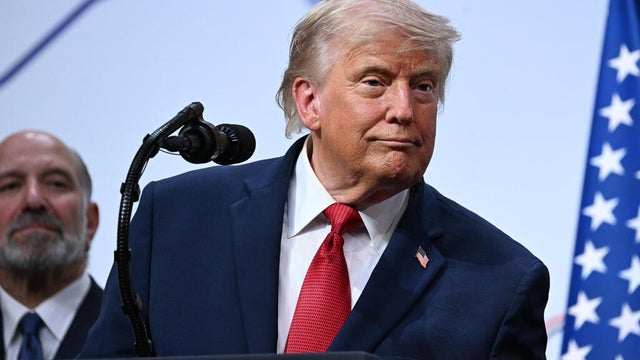
The memorandum of understanding that President Trump struck with Iran last weekend sets up a two-month sprint toward a longer-term deal over the fate of the Iranian nuclear program, eight years after Mr. Trump pulled out of an Obama-era nuclear agreement that he viewed as "disastrous" and "one-sided."
The Trump administration says its memorandum of understanding is far superior to the Obama administration's 2015 Joint Comprehensive Plan of Action (JCPOA), and will do much more to prevent Iran from having a nuclear weapon. Defense Secretary Pete Hegseth insists it will be different from the JCPOA because the U.S. will "make sure the military option is there," something Mr. Trump stressed.
The memorandum is not a final agreement like the JCPOA, which numbered hundreds of pages and was packed with technical details.
Rather, the new deal is a 14-point framework that extends the ceasefire in the U.S.-Iran war and sets the stage for talks on a permanent nuclear agreement. It doesn't include specifics on what will happen to Iran's enriched uranium or its nuclear program, leaving those details to be sorted out over the next 60 days.
The text of the deal was read out to reporters by senior U.S. officials on Wednesday.
Although the memorandum is merely a roadmap for further negotiations, since Trump administration officials are comparing the two, here are some of the differences and similarities:
Both deals ban Iran from acquiring nuclear weapons — but the JCPOA was far more specific about how
Mr. Trump said in a news conference Wednesday he wanted to make sure Iran could never "procure" a nuclear weapon, aside from just ensuring Iran can't develop one, language he said he wanted in the memorandum of understanding.
But the JCPOA also included a commitment from Iran to not procure a nuclear weapon.
"Iran reaffirms that under no circumstances will Iran ever seek, develop or acquire any nuclear weapons," the JCPOA reads.
The new memorandum says Iran "reaffirms that it shall not procure or develop nuclear weapons." But exactly how that will be enforced will be left up to the final deal.
JCPOA let Iran enrich uranium at a limited level. It's unclear what a Trump-era deal will require.
Under the JCPOA, Iran wasn't required to destroy all of its enriched uranium, but it was required to dramatically reduce its stockpile at a time when its levels of highly enriched material were far lower than they are now.
Iran also agreed in the JCPOA to cap its level of uranium enrichment to 3.67% for 15 years, well below the 90% level required to produce nuclear weapons. It required Iran to confine all of its enrichment to a single nuclear facility in Natanz. The JCPOA also restricted the number and types of centrifuges Iran could have in operation.
The new memorandum says the mechanics of handling Iran's uranium will be decided in technical negotiations over the next 60 days, but it suggests Iran will face some limits. Unlike when the JCPOA was negotiated, Iran's uranium stockpile now includes uranium enriched to 60% purity — just a short step to weapons-grade material.
The deal says the two countries "agreed to resolve the disposition of stockpiled enriched material." It includes a "minimum" standard of "downblending" Iran's enriched uranium on site under the supervision of the International Atomic Energy Agency.
It's not yet clear if the enriched uranium would be destroyed or removed from the country, or merely downblended to a lower grade. The memorandum doesn't get into specific figures. And the new agreement doesn't mention centrifuges.
Mr. Trump didn't express urgency over Iran's enriched uranium Wednesday, noting that most of the 60%-enriched material is believed to be buried underneath rubble following a round of U.S. airstrikes last year.
"Nobody is going to get that for a long time, unless we want to get it," the president told reporters at a news conference at the G7 summit in France, adding that it's "not valuable" and "nobody's touching it."
Earlier this year, Mr. Trump pressed Iran to abandon all uranium enrichment, a step that would be stricter than the JCPOA — and one that Iranian officials have refused to take in the past. Iran has long insisted its nuclear program only exists for peaceful purposes, though the 60%-enriched uranium that it has accumulated in recent years is well above the level needed for most civilian uses.
On Wednesday, however, Mr. Trump appeared to leave open a door for Iran to have a civilian nuclear program.
"It is a little hard, though, when you say that somebody wants it, other people have it, other, adjoining states have it," he said. "And you're not letting them have it for purposes of electricity and things like that. It's always a little tough. You have to use a little common sense."
Sunset clauses
The JCPOA had 10 and 15-year sunset clauses, a key criticism leveled against the deal.
The memorandum of understanding, not yet a final agreement, has no sunset clauses. It's not clear if a final deal will.
Mr. Trump told The New York Times over the weekend he wants Iran to agree to suspend all uranium enrichment for 15 to 20 years — but he also wants permanent restrictions that say Iran can "only enrich for nonmilitary purposes. Forever."
Sanctions relief
Under the JCPOA, in exchange for Iran agreeing to limits on its nuclear program, it was granted relief from international sanctions. The sanctions relief was phased in and dependent upon verification from the IAEA, and both the JCPOA and the United Nations Security Council set a schedule for lifting sanctions.
Under the memorandum, U.S. sanctions will be lifted on an agreed-upon schedule as part of a final deal, not so different from the JCPOA.
One key difference is that several other countries involved in sanctioning Iran were parties to the JCPOA, including China, Russia, the U.K. and Germany. The new memorandum is a bilateral deal between the U.S. and Iran, so it's unclear how third-party countries that also have sanctions on Iran will react.
But the memorandum of understanding gives Iran immediate waivers for oil and petroleum exports, according to the text as read by U.S. senior officials.
Nikki Haley, the president's former U.S. ambassador to the United Nations, balked at the possibility of Iran profiting from oil sales immediately.
"If this is true, Iran wins," she wrote on X. "There should be zero sanctions relief day one."
Iran has claimed in recent days that the deal would also lead to the immediate unfreezing of billions of dollars in Iranian assets that were frozen under U.S. sanctions. The Trump administration has denied this, saying Iran will only get sanctions relief after it complies with its obligations.
Funding for Iran
The Iran memorandum says the U.S. and regional partners will "develop a definitive mutually agreed plan with at least USD $300 billion for the reconstruction and economic development of the Islamic Republic of Iran," with a mechanism for implementation to be discussed later.
The president, however, insists that any investments in Iran would be voluntary.
"We are not investing any money in Iran, by the way," the president said at the G7 summit in France. "The rumor got out there yesterday, it was ridiculous. We have the right to go in some day and do, if I want to do something or if somebody wants to do something. But we are not investing any money, we have no obligation to invest any money in Iran."
The JCPOA did not include funding for economic development.
In 2016, however, Iran did receive $1.7 billion in cash from the U.S. to settle a decades-old dispute. Before Iran's 1979 revolution, the country paid the U.S. $400 million for arms purchases that were never delivered. Under former President Barack Obama, the U.S. returned that money, with interest amounting to roughly $1.3 billion.
Ballistic missiles
The JCPOA did not put limits on Iran's conventional military, including its supply of ballistic missiles, something for which the deal was criticized.
The new memorandum doesn't mention ballistic missiles, either. On Wednesday, Mr. Trump said he thinks it's "okay" for Iran to have ballistic missiles in proportion to the stockpiles of neighboring countries.
"If other countries have them, it's a little bit unfair for them not to have some," he said. "A ballistic missile is not the same thing as what we're talking about when we talk nuclear. But if Saudi Arabia and Qatar and they all have some, I would say in relative proportion, I think it's okay. That's what I mean."
State-sponsored terrorism
Neither the JCPOA nor the latest Iran memorandum explicitly addresses consequences for funding terrorism.
Mr. Trump told reporters Wednesday his administration will work on a "parallel effort" with Persian Gulf nations to address "non-nuclear issues," like Iran's conventional missiles and funding of terrorist proxies.
Iran's funding of militant groups like Hamas, Hezbollah and the Houthis — which the U.S. has designated as terrorist organizations — has long been a point of contention.
Under the JCPOA, terrorism-related sanctions the U.S. imposed on the Iranian regime remained in place, although critics suggested the sanctions relief the U.S. provided could free up cash for Iran to fund terrorism.
Source
|