Amid Western sanctions, China's yuan has its moment in Russia
Posted by Temmy
Tue, September 20, 2022 1:33pm
The Chinese currency is popular like never before because of the ‘toxicity' of the dollar and euro for Russians, say experts.
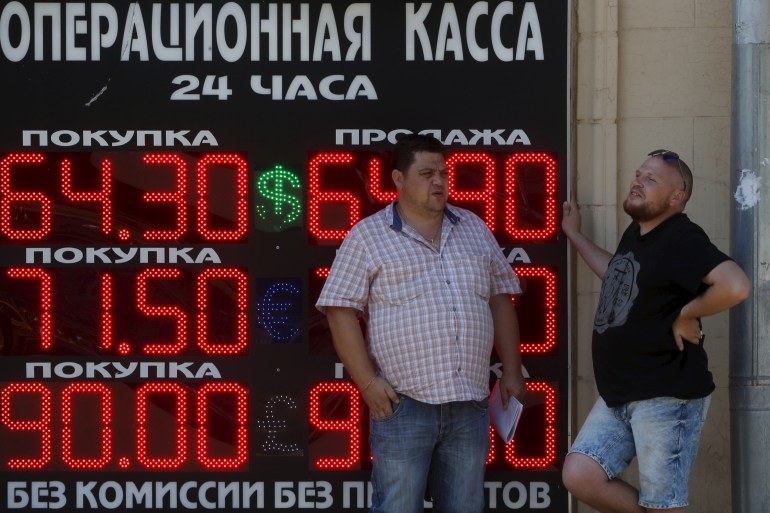
Russian banks have been moving to expand their yuan offerings [File: Sergei Karpukhin/Reuters]
The Chinese yuan is rapidly gaining popularity in Russia amid Western sanctions over the war in Ukraine.
Trading on the Moscow Exchange, the currency has risen more than 50 fold this year, jumping from 0.5 percent of the total transactions in January to 26 percent in August.
It is increasingly used in Russia's international trade settlements and several of its largest companies have started issuing yuan-denominated bonds in a bid to raise capital.
Russians have also begun stocking up as a growing number of banks offer clients the option of opening deposits in yuan.
Individuals bought a record high of 4.5 billion yuan ($0.6bn) last month, according to data from Russia's central bank.
Analysts said that Russia's pivot to the yuan could provide a boost to China's ambitions of promoting greater international usage of its currency, while also helping Moscow to bypass Western sanctions aimed at severing it from the global financial system.
"The popularity of yuan is due to the growing toxicity of the dollar and euro for Russians," said Alexandra Prokopenko, an independent analyst who previously worked as an adviser to the Russian central bank.
"As a result of sanctions, Russian accounts abroad can be frozen at any moment, not all foreign banks are willing to work with Russian banks, and transactions involving dollars and euros take a very long time to process," she explained. "There are no such issues with the yuan."
Shortly after President Vladimir Putin ordered Russian troops into Ukraine, the United States and the European Union imposed sanctions against Russia's central bank, sovereign wealth fund, and several of the country's largest financial institutions.
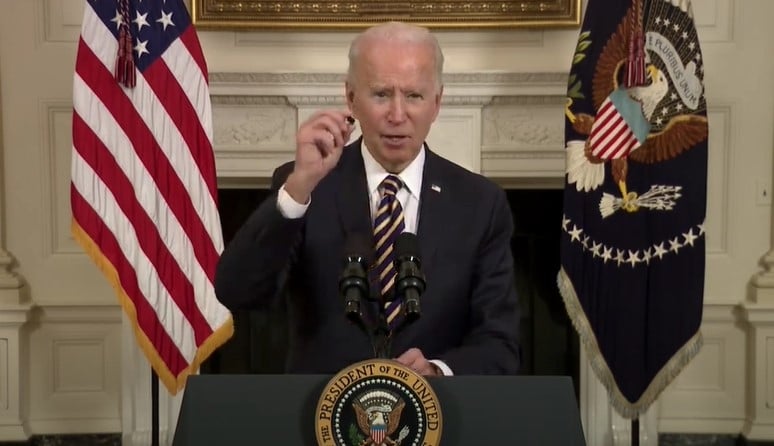
The administration of US President Joe Biden also banned the export of dollar notes to Russia.
Russia has responded to these unprecedented sanctions by drawing even closer to China.
Over the first eight months of this year, the trade turnover between the two countries increased by 31 percent to reach $117.2bn and officials have predicted that it is on course to hit a record of $200bn before 2023.
Beijing has emerged as Moscow's single biggest energy customer and Chinese companies have slowly begun to fill the gaps in the Russian market created by the mass exodus of Western corporations.
"China is Russia's largest trading partner so it's logical that there's a growing demand for yuans on the Russian market," Prokopenko said. "Businesses need yuan to conduct trade settlements because under the current conditions, it's easier to do so in yuan than in dollars or euros."
Since the start of the war, Russia has become the third-largest market for yuan payments outside mainland China, accounting for nearly 4 percent of international settlements involving the Chinese currency in July, according to the SWIFT payment system.
Earlier this month, state energy giants Gazprom and China National Petroleum Corporation signed a deal under which China would begin to pay for Russian natural gas supplies exclusively in yuan and rubles.
A growing number of Russian corporate giants are also seeking to attract funding in the Chinese currency.
Over the past two months, state oil conglomerate Rosneft, aluminium producer Rusal, gold miner Polyus, and metallurgical company Metalloinvest have issued yuan-denominated bonds with a total value of 25.6bn yuan ($3.7bn).
Meanwhile, the Russian finance ministry has announced plans to issue sovereign bonds in yuans, although it is widely expected that preparations for the placement will take at least another year or two.
Valery Yemelyanov, a stock market analyst at BKS Mir investment firm, told Al Jazeera that due to the high demand for the yuan in Russia, companies which had accumulated large amounts of the currency were able to sell it at a favourable interest rate.
"This is a fairly new experience for the Russian market, but a successful one so far," he said. "Many companies are willing to place a bet on the yuan and plan their future business processes around it."
Russian banks have also been moving to expand their yuan offerings.
Russians can now open yuan-denominated accounts at 10 of the country's largest 30 banks, the RIA Novosti state news agency reported.
Earlier this month, VTB Bank and Alfa-Bank became the first two Russian banks to allow clients to send money transfers to China in yuan without using the SWIFT international payment system.
Alexander Borodkin, the head of the savings and investment unit at Otkritie bank, said that this growing interest in the yuan was driven by the Russian banking system's efforts to dump the dollar and euro.
He explained that banks were actively trying to discourage customers from storing savings in dollars or euros by refusing to open new deposits in these currencies, offering poor rates, or charging commissions.
"The ideal option for the banking system is to have all of its clients convert their dollars and euros into rubles, but since not everyone will want to do that, it's good to have the yuan as an option for those who want to diversify their savings account," he said.
Despite the yuan's recent momentum, serious questions still remain about the Chinese currency's ability to replace the dollar and euro for Russia.
Yemelyanov of BKS Mir warned that because the yuan is not a freely convertible currency, Russians could lose out should Beijing decide to weaken the currency.
Another problem is that the yuan is liquid and less convenient for investments, compared with the dollar or euro.
"Beyond bonds and deposits, there really aren't many other ways you can use the yuan in Russia, " he said. "So if a person has significant capital, he will think 10 times about converting his resources from dollars and euros to yuan because it's not all that clear what he can do with it afterwards."
Source
|