Scientists ‘Awaken' 13 Prehistoric Viruses From The Siberian Permafrost — And Warn That Climate Change Could Rouse More
Posted by Temmy
Mon, December 05, 2022 4:08pm
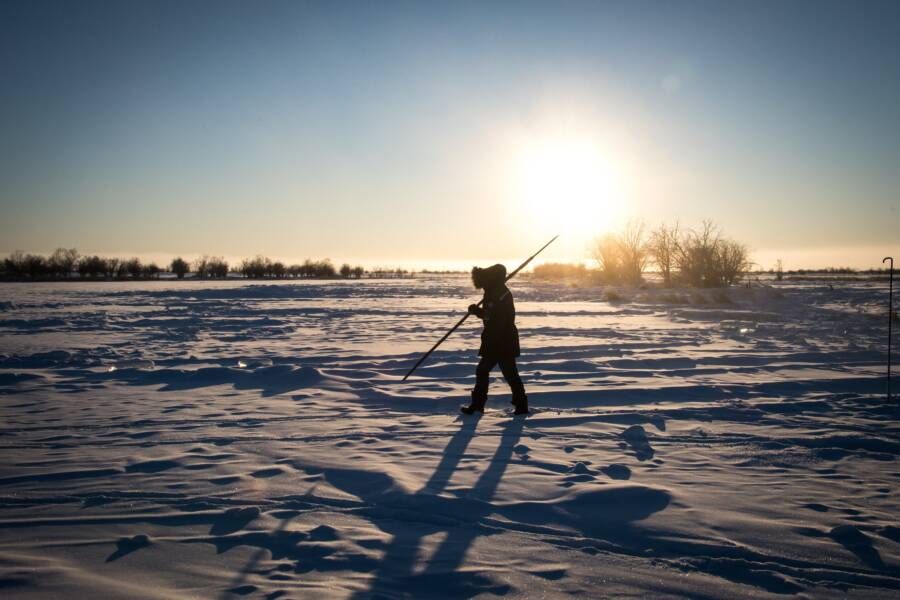
MLADEN ANTONOV/AFP via Getty Images | As the Siberian permafrost layers melt, scientists fear that ancient viruses may reemerge.
For millennia, dangerous viruses have lurked beneath the Siberian permafrost. Now, a group of scientists has revived more than a dozen of these viruses from the ice to prove that it's possible — and to sound the alarm that more prehistoric viruses might emerge as the Earth warms.
According to a study conducted by French, Russian, and German scientists and published in bioRxiv — but not yet peer-reviewed — the researchers isolated 13 viruses from seven ancient Siberian permafrost samples. Science Alert explains that these samples were taken from beneath a lake, from the wool of a mammoth, and even from the intestines of a Siberian wolf.
One of these viruses, the Independent reports, had spent an estimated 48,500 years in deep permafrost but still showed signs of being infectious.
The researchers say that this is powerful evidence that viruses trapped in permafrost are not as "rare" as previously thought. They warned that such viruses may pose a public health threat as climate change warms the Earth and melts the planet's frozen regions like Siberia.
"One quarter of the Northern hemisphere is underlain by permanently frozen ground, referred to as permafrost," the researchers wrote in their study.
"Due to climate warming, irreversibly thawing permafrost is releasing organic matter frozen for up to a million years[including] viruses that remained dormant since prehistorical times."
Modern-day humans are more than familiar with coronaviruses, pictured here, and scientists warn that melting permafrost could unleash long-dormant viruses.
There's good news and bad within this scenario, the researchers explained in their study. On the one hand, humans have developed effective technology to combat bacterial infections. So if melting permafrost revives ancient bacteria, humanity would be capable of controlling it.
"Fortunately, we can reasonably hope that an epidemic caused by a revived prehistoric pathogenic bacterium could be quickly controlled by the modern antibiotics at our disposal," the scientists wrote.
However, ancient viruses could present a dangerous challenge to humanity.
"The situation would be much more disastrous in the case of plant, animal, or human diseases caused by the revival of an ancient unknown virus," the researchers explained in their study.
They pointed out that, unlike bacteria, which can often be treated with a broad range of antibiotics, viruses currently need more specialized treatment that can take time to develop.
"As unfortunately well documented by recent (and ongoing) pandemics each new virus, even related to known families, almost always requires the development of highly specific medical responses, such as new antivirals or vaccines," the researchers wrote.
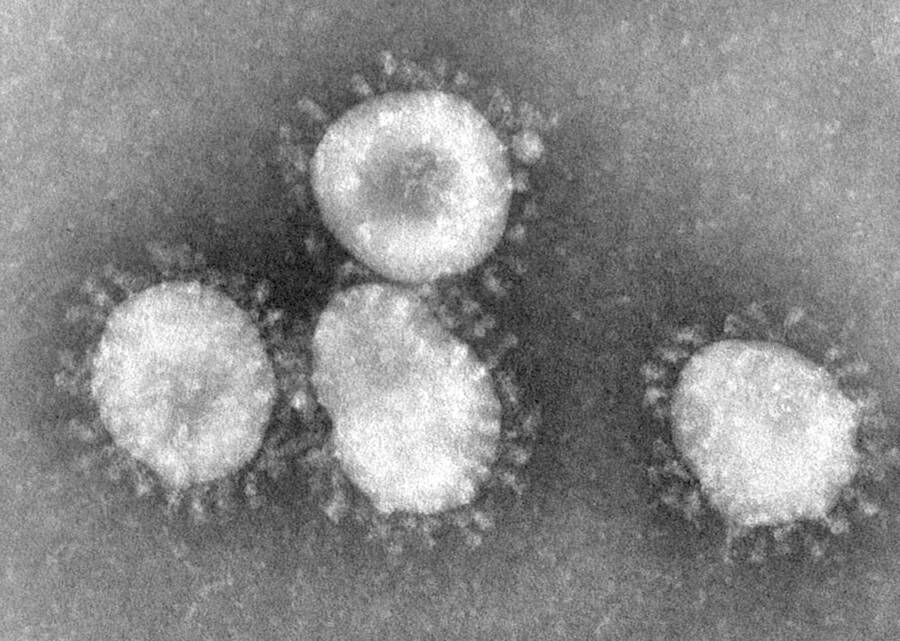
CDC/PHIL/CORBIS/Corbis via Getty Images | Modern-day humans are more than familiar with coronaviruses, pictured here, and scientists warn that melting permafrost could unleash long-dormant viruses.
Source
|